2016/10/06


2016/09/29
Writing something original makes me...run down!!!!
Сочинить что-то действительно оригинальное - почти нет надежды!!!!
Какой кошмар -
Какой кошмар -
ну, просто, что ни сочиняй,
Оригинальства не видай!!!!
Как-то на днях какой-то небольшой творческий порыв подтолкнул меня написать небольшое стихотворение, просто мысли и ощущения сами сложились в такую рифму, и ее нельзя было не записать. Но.... сам процесс написания этого стиха поверг меня в небольшое уныние и даже немного разнервировал. И вот почемую
Не так давно я писала творческую работу в рамках своей докторской учебы в Брно, по Critical Discourse Analysis. На основе всего прочитанного материала по теме я придумала немного сказочное Предисловие к работе, типа Once upon a time there lived ...:
- Кто самый великий путешественник на свете?
- Текст!!!
Знания об этом Великом Путешественнике теперь не дают мне спокойно жить, потому что что бы я ни писала, ни сочиняла, ни говорила - всегда "меня терзают смутные сомнения", везде за своими словами я вижу тексты, уже когда-то мною прочитанные, произнесенные другими людьми и просто мною повторяемые...ничего оригинального с моей стороны получается не получается - даже когда складывается какая-то приятная рифма или находится яркое стилистическое средство, я почти вежде вижу за ними кого-то еще, уже их давно использовавшего...
Итак, вот мое стихотворение, опыт работы над которым - и над его переводом, можно назвать так - чьи отголоски слышатся в нем??!!!!!
To the Rhyme...
Something inside
Tortures my mind:
some etherial meanings
want to get wordy trimmings,my emotional exclamations -
their literary dimentions.
I can't sit still
and fidget around
and won't sleep a wink
until a verse flies out!!
Что в этом тексте Мое?
Хотелось бы надеяться, что хоть что-то. Emotional exclamations, разве что .... Только данный бином (Stone Wall problem) нужно понимать как "выражение моих эмоций", а не "эмоциональное (полные эмоций) выражения".
Интересно, что когда пишешь-сочиняешь, анализ текста, тобою сочиняемого, очень быстро проходит у тебя в голове, и сразу мозг выводит "отчет" - что откуда ты какое слово знаешь и где ты его встречал....
Например:
Something inside
Tortures my mind:
известные сочетания, взятые мною откуда-то когда-то прочитанного, отголоски которых навязчиво слышатся в моей голове
some etherial meanings
это etherial позаимствовано мною из нашего вокабуляра по теме Живопись....
Все остальное тоже откуда-то уже когда-то изученного и пр.
Даже a verse flies out сочинилось мною "по правилам" и может быть четко объяснено - в одном из пунктов моей работы рассматривается проблема particle verbs and aspectual semantics....
И перевод мой:
Непонятное желание
точит мое сознание,
Моим ощущениям
Нужно выражение,
Они хотят облечься
В красивые слова.
Мне на месте не сидится
Мысли мучают меня,
Успокоюсь я когда
В рифму сложатся слова!!
Когда писала перевод, первым был вариант Смутное желание. Мгновенно пролетает мысль, что "Меня терзают смутные сомнения" - это же фраза не моя, она знакома с детства и глубоко укоренилась:
Все остальное без всяких даже смутных сомнений - не мое, мною взятое, может, немного переделанное, откуда-то из багажа моего вербального - разговорного-читального - опыта:
"Мысли облекаются в слова"
"Слова складываются в рифму"
"на месте не сидится"
и пр. и пр. и пр.
Да.....трудно быть оригинально творческим, когда миром накоплен такой словесный опыт ....ну, как же сочинить совсем свое, свое-свое.......???!!!!!!
2016/05/22
A very interesting article -
the IP metaphor of how our brain works is going flop as well as ideas of creating the artificial intellect!! Hurrahhh!!!!
Just a passage from it, an important one:
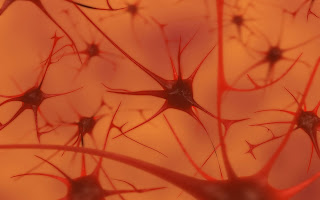
The empty brain by Robert Epstein
Think how difficult this problem is. To
understand even the basics of how the brain maintains the human intellect, we
might need to know not just the current state of all 86 billion neurons and
their 100 trillion interconnections, not just the varying strengths with which
they are connected, and not just the states of more than 1,000 proteins that
exist at each connection point, but how
the moment-to-moment activity of
the brain contributes to the integrity of the system. Add to this the
uniqueness of each brain, brought about in part because of the
uniqueness of each person’s life history, and Kandel’s prediction starts
to sound overly optimistic. (In a recent op-ed in The New York Times,
the neuroscientist Kenneth Miller suggested it will take ‘centuries’ just to
figure out basic neuronal connectivity.)
https://aeon.co/essays/your-brain-does-not-process-information-and-it-is-not-a-computer
the IP metaphor of how our brain works is going flop as well as ideas of creating the artificial intellect!! Hurrahhh!!!!
Just a passage from it, an important one:

The empty brain by Robert Epstein
Think how difficult this problem is. To
understand even the basics of how the brain maintains the human intellect, we
might need to know not just the current state of all 86 billion neurons and
their 100 trillion interconnections, not just the varying strengths with which
they are connected, and not just the states of more than 1,000 proteins that
exist at each connection point, but how
the moment-to-moment activity of
the brain contributes to the integrity of the system. Add to this the
uniqueness of each brain, brought about in part because of the
uniqueness of each person’s life history, and Kandel’s prediction starts
to sound overly optimistic. (In a recent op-ed in The New York Times,
the neuroscientist Kenneth Miller suggested it will take ‘centuries’ just to
figure out basic neuronal connectivity.)
https://aeon.co/essays/your-brain-does-not-process-information-and-it-is-not-a-computer2016/05/03
Day 4
Plenary by Jan Blake
Man, woman, life, love: stories from Africa, the Caribbean, and beyond
The video can be watched at:
http://iatefl.britishcouncil.org/2016/session/plenary-jan-blake

Just loved it, the way Jan was telling these stories is very persuasive, emotional and involving!!!!
Plenary by Jan Blake
Man, woman, life, love: stories from Africa, the Caribbean, and beyond
The video can be watched at:
http://iatefl.britishcouncil.org/2016/session/plenary-jan-blake

Just loved it, the way Jan was telling these stories is very persuasive, emotional and involving!!!!
2016/04/19
Day 4

Plenary by Scott Thornbury
1966 and all that: a critical history of ELT
The video can be watched at:
http://iatefl.britishcouncil.org/2016/session/plenary-scott-thornbury
_____________________________________________________
You cannot but be carried away by this Talk!!!
As a "Mr Grammar" is speaking about "the Archeology of ESL"!!!

Do you know who or what is or are "Grammar McNuggets"?
Can you see any connections between 1066 and 1966?
What unites TESOL - N.Chomsky - Psycholinguistics - P.Newmark?
Can you build "the bridge" between "communication" and "psychology" in ESL?
How would you continue the statement: Languages should be taught like a ....?
a) vocabulary
b) skill
c) grammar
No doubt you know
the Era of Space Exploration,
the Era of the Cold War and the Iron Curtain,
the Era of the Internet.
But .......... do you know the ''Mistakes-Out!!'' Era (1967)?
:):):):):)
You can find answers to these and many other intriguing questions about language teaching watching this Talk!
Or you can brush up your knowledge of language teaching methodology!
In any case - it is a useful Fun!!!!


Plenary by Scott Thornbury
1966 and all that: a critical history of ELT
The video can be watched at:
http://iatefl.britishcouncil.org/2016/session/plenary-scott-thornbury
_____________________________________________________
You cannot but be carried away by this Talk!!!
As a "Mr Grammar" is speaking about "the Archeology of ESL"!!!
Do you know who or what is or are "Grammar McNuggets"?
Can you see any connections between 1066 and 1966?
What unites TESOL - N.Chomsky - Psycholinguistics - P.Newmark?
Can you build "the bridge" between "communication" and "psychology" in ESL?
How would you continue the statement: Languages should be taught like a ....?
a) vocabulary
b) skill
c) grammar
No doubt you know
the Era of Space Exploration,
the Era of the Cold War and the Iron Curtain,
the Era of the Internet.
But .......... do you know the ''Mistakes-Out!!'' Era (1967)?
:):):):):)
You can find answers to these and many other intriguing questions about language teaching watching this Talk!
Or you can brush up your knowledge of language teaching methodology!
In any case - it is a useful Fun!!!!

2016/04/16
I am a Blogger at IATEFL, Birmingham 2016

April 15
Day 4
Plenary by Diane Larsen-Freeman

April 15
Day 4
Plenary by Diane Larsen-Freeman
Shifting metaphors from computer input to ecological affordances
The talk can be watched here: https://iatefl.britishcouncil.org/2016/session/plenary-diane-larsen-freeman
The word "metaphors" in the talk title immediately caught my eye...as right at the moment metaphors are my linguistic research focus...And the language learner and the learning process described and commented on by Diane is one of the examples of "Metaphors We Live By" (J.Lakoff)!!!:)
And these really ARE metaphors we live by!!!:):)
The important fact described by Diane was that a foreign language student is no longer treated as a computer with its "input - output" system (materials suggested to the student - the student's speech as a result) but as a complex dynamic system which can react to any new change in the learning environment and adopt himself to these changes.
Bright was the comparison made by Diane of a language learner and the adaptive immune system which reacts to any "unknown invaders" by adaptin itself and thus trying to gain advantages for itself from it!!

The word "metaphors" in the talk title immediately caught my eye...as right at the moment metaphors are my linguistic research focus...And the language learner and the learning process described and commented on by Diane is one of the examples of "Metaphors We Live By" (J.Lakoff)!!!:)
And these really ARE metaphors we live by!!!:):)
The important fact described by Diane was that a foreign language student is no longer treated as a computer with its "input - output" system (materials suggested to the student - the student's speech as a result) but as a complex dynamic system which can react to any new change in the learning environment and adopt himself to these changes.
Bright was the comparison made by Diane of a language learner and the adaptive immune system which reacts to any "unknown invaders" by adaptin itself and thus trying to gain advantages for itself from it!!

2016/04/14
I am a Blogger at IATEFL, Birmingham 2016
April 14
Day 3
The ‘native factor’, the haves and the have-nots
The talk can be watched here:
Plenary by Silvana Richardson
I am happy that I listened to this talk because this is an issue that I faced myself a couple of times when your professionalism as a foreign language teacher is diminished to your place of origin.
I am proud that my motherland is Russia and that Russian is my native tongue.
As a professional I feel like called upon to represent my country the very best way I can, because I know that the way I am makes other people say "Oh, well, then Russian people are like this!!"
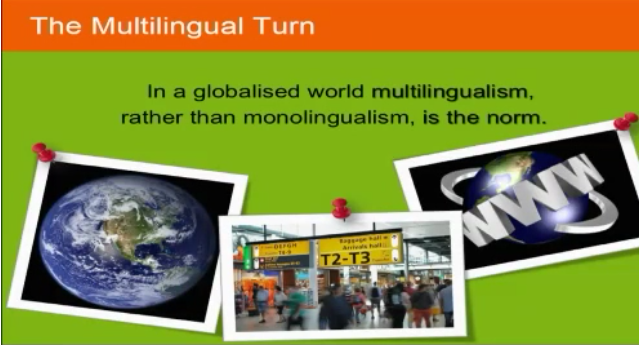
Here I post some slides from the Presentation which was used in the talk, I think these slides say for themselves so no extra comments are necessary.
Just just a remark. I know it from my own experience that it is the best way when an ESL teacher is a bilingual who teaches English students from his country because only he can teach them the very best way as he knows cultural peculiarities of his students - he shares with them things making up their backgrounds, he knows peculiarities of their mentality, he knows what difficulties may arouse in learning English and can help them avoid or understand mistakes. He can foreshadow all this.
Whereas an English native speaker as a teacher can be very valuable at later stages of language acquisitin when these are communicative skills that are already mostly to be developed.
That's my view!
So, I would call this talk like "SPREAD THE WORD!"
Spread the word that a professional is not a matter of nationality or anything. It is a matter of professionalism!!
Many thanks to Silvana for her Talk!!!


April 14
Day 3
The ‘native factor’, the haves and the have-nots
The talk can be watched here:
Plenary by Silvana Richardson
I am happy that I listened to this talk because this is an issue that I faced myself a couple of times when your professionalism as a foreign language teacher is diminished to your place of origin.
I am proud that my motherland is Russia and that Russian is my native tongue.
As a professional I feel like called upon to represent my country the very best way I can, because I know that the way I am makes other people say "Oh, well, then Russian people are like this!!"
Here I post some slides from the Presentation which was used in the talk, I think these slides say for themselves so no extra comments are necessary.
Just just a remark. I know it from my own experience that it is the best way when an ESL teacher is a bilingual who teaches English students from his country because only he can teach them the very best way as he knows cultural peculiarities of his students - he shares with them things making up their backgrounds, he knows peculiarities of their mentality, he knows what difficulties may arouse in learning English and can help them avoid or understand mistakes. He can foreshadow all this.
Whereas an English native speaker as a teacher can be very valuable at later stages of language acquisitin when these are communicative skills that are already mostly to be developed.
That's my view!
So, I would call this talk like "SPREAD THE WORD!"
Spread the word that a professional is not a matter of nationality or anything. It is a matter of professionalism!!
Many thanks to Silvana for her Talk!!!




Подписаться на:
Сообщения (Atom)
ОТКУДА БЕРУТСЯ ДЕТИ Родители сплюнулись, и получилась точная копия - детенок. А говорят, сперматозоиды, яйцеклетки! Слюни! ⠀ Так чт...

-
 Evelyn Waugh "Decline and Fall" Waugh - "the only first-rate comic genius that has appeared in English since Bernard Shaw.”...
 -
 Teacher’s Day in Russia October 05 In Russia since 1965 The Teacher’s Day was celebrated on the first Sunday in October. But since 1994 by ...
 -
 Washington Irving Now we tried our hands at reading "The Legend of the Sleepy Hollow" and "Little Britain". What are you...